Every anniversary arrives quietly.
There’s no ceremony unless you create one. No rule that says you have to stop what you’re doing. Life keeps moving—work emails, school pickups, dinner plans. And yet, once a year, there’s this small moment that asks for your attention.
We’ve made it another year.
Most people don’t struggle with whether anniversaries matter.
They struggle with how to mark them without it feeling forced, generic, or performative.
That’s where the idea of “anniversary gifts by year” comes in. Not as a checklist—but as a framework.
At ALF Home & Gifts, we’ve spent years helping people choose gifts for milestones that carry more weight than birthdays or holidays. And what we’ve learned is this: the traditions aren’t magic on their own. They work only when you understand what they’re trying to express—and then make them personal.
Why These Traditions Exist in the First Place
The original anniversary lists weren’t romantic in the modern sense. They were practical.
Early marriage was about building stability—often with limited resources. Materials like paper, wood, and metal reflected what couples actually had access to, and what they were slowly accumulating together.
Over time, the lists evolved. New materials were added. Jewelry entered the picture. “Modern” alternatives appeared.
But the underlying idea stayed the same:
each year of marriage asks for a different kind of care.
Some years need patience.
Some need flexibility.
Some deserve recognition simply because you didn’t give up.
The First Anniversary Is Awkward—And That’s Honest
The first year doesn’t feel epic while you’re in it.
It feels like logistics.
Learning habits.
Figuring out how two people actually share space, money, time, and stress.
That’s why the first anniversary doesn’t call for something grand. It calls for something attentive.
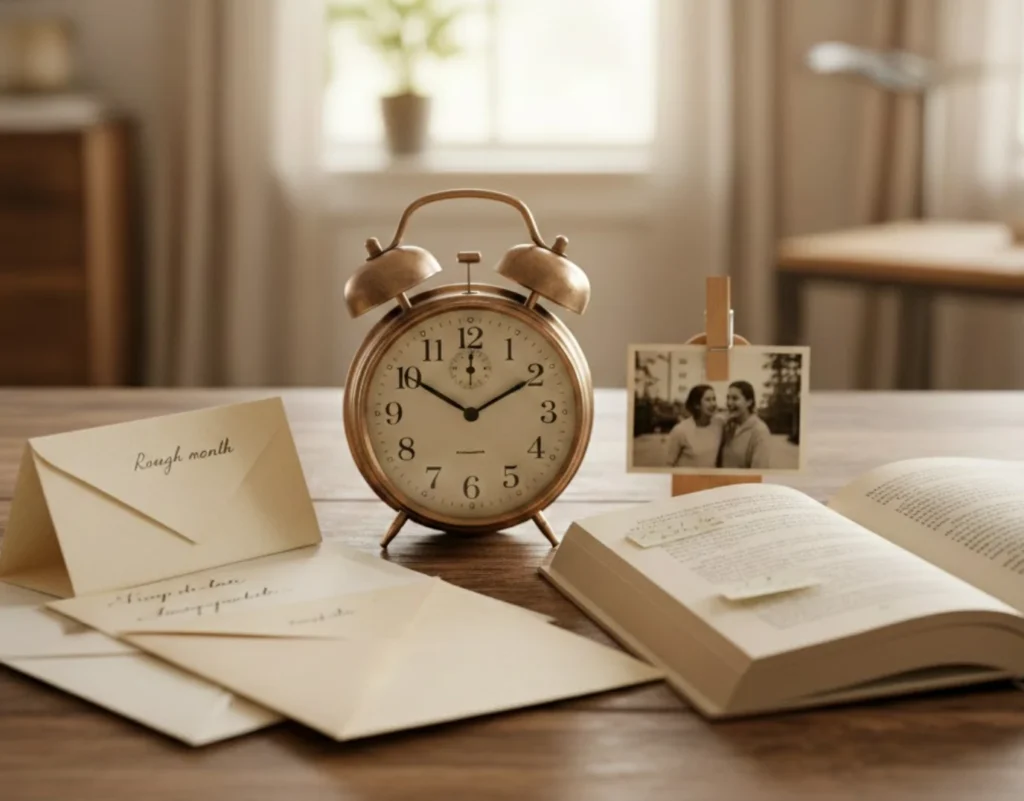
Paper became the traditional symbol not because it’s poetic, but because it’s ordinary. You touch it every day. You can ruin it easily. You have to handle it with care.
We’ve seen couples do this year well when the gift captures something specific:
- A letter written during a rough month, not just the happy ones
- A printed photo from an unplanned, forgettable-but-perfect weekend
- A book that one partner underlined and argued with in the margins
Some people choose clocks as the modern alternative. That works—not because time is abstract, but because the first year often feels long in retrospect. You survive it. You earn it.
By Year Five, the Question Isn’t “Do We Love Each Other?”

It’s “How do we live together well?”
Five years in, couples stop performing marriage and start practicing it.
Wood fits here for a reason. Not the polished showroom kind—but the kind that shows wear. The dining table that carries knife marks. The shelf that holds too much weight but hasn’t collapsed.
When customers come to us looking for five-year anniversary gifts, the best ones aren’t flashy. They’re integrated into daily life:
- Something used in the kitchen, not displayed
- Something sturdy enough to age with the home
- Something that quietly says, this is ours
The modern alternative—sapphires—works when it’s chosen thoughtfully. Not as an upgrade, but as a marker. Five years is often when people finally pause long enough to say, we’ve actually built something.
Ten Years Is Less About Celebration, More About Recognition
Ten years doesn’t need hype.
It needs acknowledgment.
By a decade in, most couples have been reshaped by real life: career detours, health scares, relocations, children—or the decision not to have them.
Tin and aluminum don’t impress at first glance. They aren’t precious. But they last. They don’t corrode easily. They adjust under pressure.
That’s why these materials make sense here.
We’ve seen ten-year gifts land best when they recognize endurance:
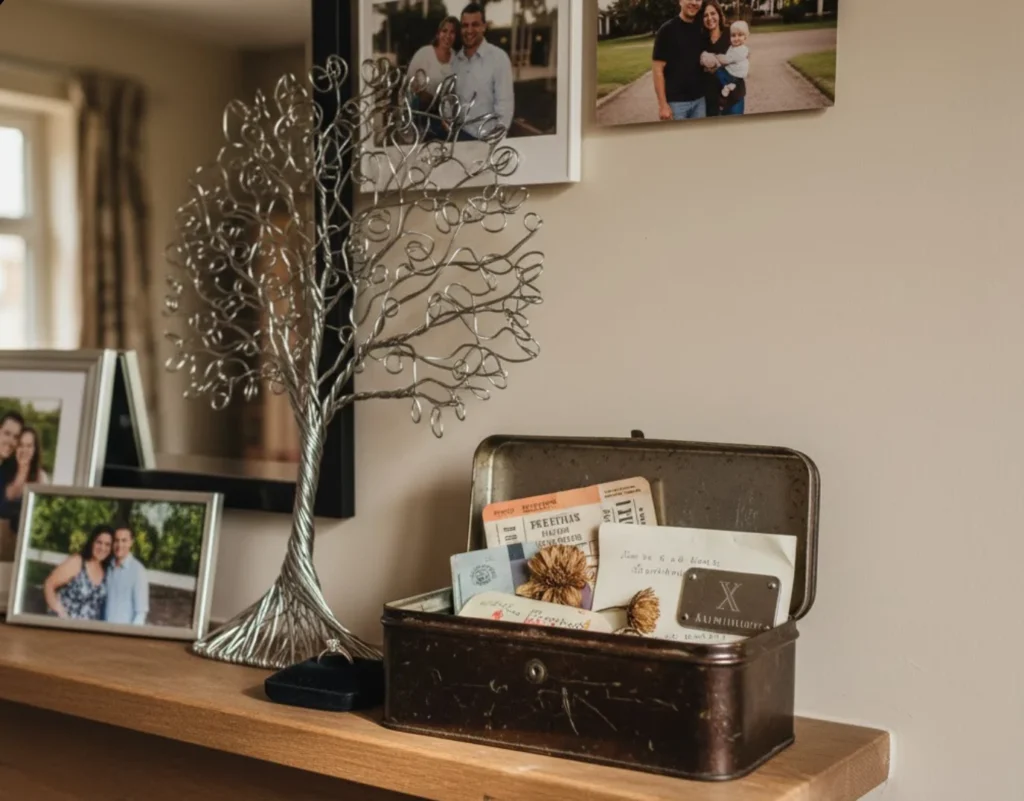
- A keepsake box filled slowly, not all at once
- A piece of art that reflects a shared value, not a trend
- Yes, sometimes diamonds—but chosen to mark survival, not status
Ten years is often when couples stop asking what marriage should look like and start accepting what theirs does look like.
The Big Milestones Feel Different for a Reason
Some anniversaries carry collective weight.
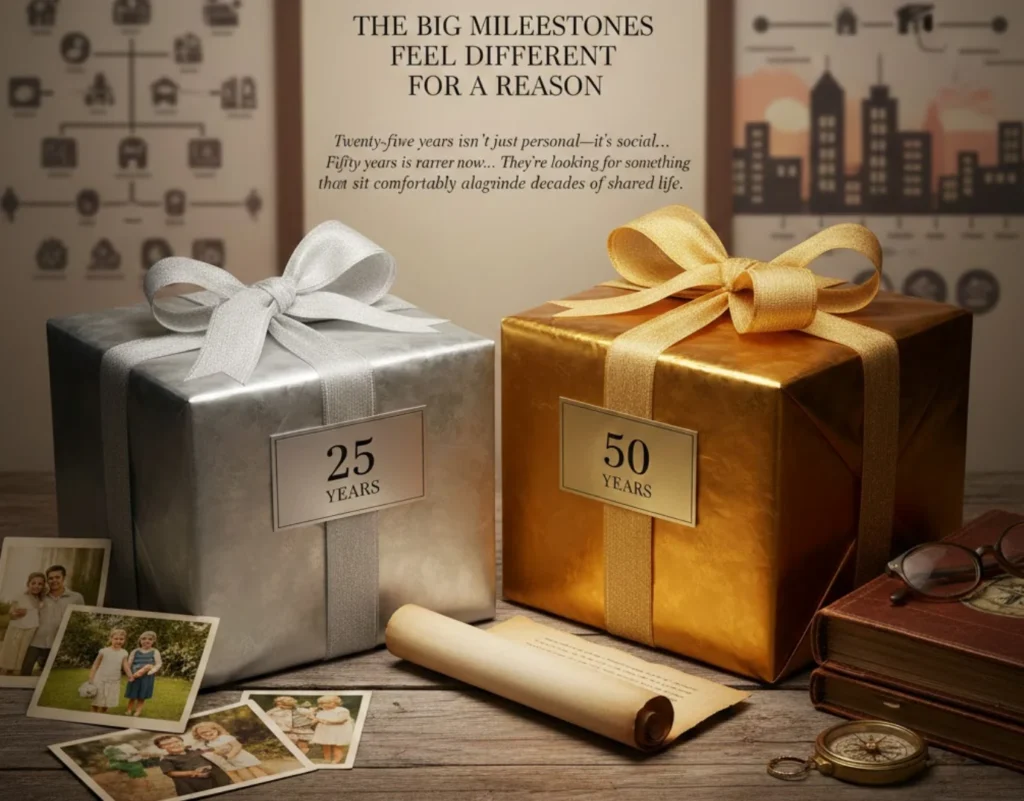
Twenty-five years isn’t just personal—it’s social. People notice. Children are often grown. Stories accumulate.
Silver reflects light without overpowering it. It’s subtle. Familiar. Still valuable.
Fifty years is rarer now, and it shows. Gold isn’t chosen because it’s flashy, but because it doesn’t fade. It outlasts trends, crises, and opinions.
When people shop for these milestones, they’re rarely looking for novelty. They’re looking for something that can sit comfortably alongside decades of shared life.
Buying for Other Couples Requires a Different Instinct
When you’re not part of the marriage, guessing gets risky.
The safest—and most appreciated—anniversary gifts for parents or close friends tend to do one of two things:
- Honor shared memory
- Create space for future time together
We’ve seen deeply emotional reactions to things that look simple on paper:
- A photo book assembled quietly over months
- A dinner reservation at a place no longer fashionable, but still meaningful
- A gift that says, we see what you’ve held together
You don’t need to understand their marriage. You just need to respect it.
Why Physical Gifts Still Matter Now
We live in a world where almost everything disappears.
Photos scroll away. Messages vanish. Even milestones get acknowledged with a reaction emoji and then forgotten.
That’s exactly why tangible anniversary gifts still matter. They slow things down. They stay.
A well-chosen gift becomes a quiet witness. It sits in a home. It gets touched. It gathers context.
That hasn’t gone out of style. If anything, it’s become more necessary.
If You’re Unsure What to Choose, Start Here
Instead of asking “What’s traditional?” try asking:
- What did this year demand from us?
- What almost broke us—or brought us closer?
- What do I want this gift to remind us of, five years from now?
The answers usually point to the right object.
A Closing Thought
Anniversary traditions don’t exist to limit you.
They exist to give you a place to start.
The best gifts don’t announce themselves. They don’t try to be profound. They simply say something honest at the right time.
And often, that’s enough.